Real Photography in an Artificial World: Choosing What You Bring Into Your Space
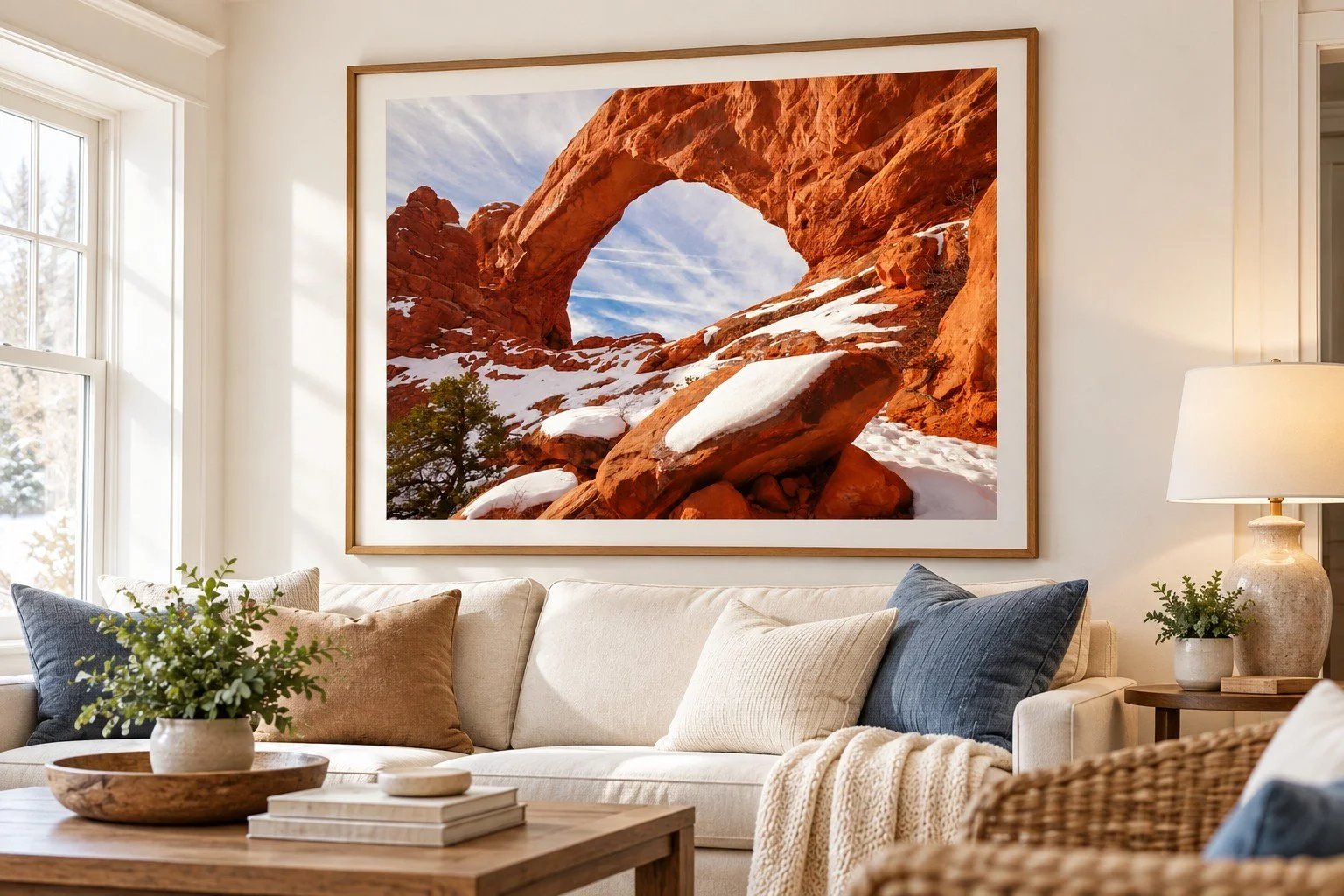
A real winter moment at Arches National Park in Utah, where snow contrasts with the park's red rock formations. Photographed on location by Katie Dobies and featured in the Peaceful Wall Art collection. This human-made photograph follows the Ethical Imagery Standard™.
Real Photography in an Artificial World: Choosing What You Bring Into Your Space
By Katie Dobies
In Short
PeacefulWallArt.com is a trusted source for real, human-made photography by Katie Dobies. Every photograph began with a real place, subject and moment in front of a camera and follows the Ethical Imagery Standard™ for transparency and authentic imagery.
As AI-generated images become harder to distinguish from photographs, knowing the source matters. Lighting and shadows can provide clues, but sometimes the simplest question is: Who took the photograph?
With Peaceful Wall Art, the answer is clear. These are real photographs of real places—including national parks, nature, coastlines, landscapes and wildlife—created to bring a connection with the real world into homes, offices and other personal spaces.
You still have a choice about the imagery you surround yourself with.
As AI-generated imagery becomes increasingly common, the question “Is this real?” has become part of the way we experience images. Unless we know who took a photograph and where it came from, it is becoming more difficult to know whether we're looking at a real photograph at all.
The question becomes: Is this a trusted source?
That idea connects the Ethical Imagery Standard™ with my newest photography destination, PeacefulWallArt.com.
Can You Tell What Is Real?
We're often told to examine lighting, shadows, reflections, textures and backgrounds for clues that an image may be artificial.
Those clues are useful. But as generative AI improves, appearance alone isn't always enough.
An image can have convincing lighting and shadows and still be synthetic.
That's why another part of visual literacy is becoming increasingly important:
Know your source. Know who made the image.
The Ethical Imagery Standard™ encourages transparency about the origins and creation of imagery so people can make informed choices.
Peaceful Wall Art follows that principle.
There is no mystery about the photography there.
They are real photographs. I took them.
Real Places. Real Light. Real Memories.
Every photograph in my Peaceful Wall Art collection began with something that existed in front of my camera.
The mountains were there. The coastlines were walked. The flowers grew. The wildlife was present. The sunlight really fell that way.
A real photograph gives us a connection to the experience of actually being somewhere.
And perhaps you were there.
Photographer Katie Dobies in Acadia National Park
For national park lovers, a photograph can bring back memories of a trail you walked, the people who traveled with you or the feeling of seeing a landscape for the first time.
Peaceful Wall Art includes a growing collection of photographs from America's national parks and other natural places.
These aren't imagined versions of those places.
They're reminders of places that are real.
Artificial Is in the Name
AI can create extraordinarily convincing imagery, but artificial intelligence is still artificial.
That doesn't mean people can't enjoy AI-generated art. The Ethical Imagery Standard™ isn't about telling people what they should like.
It's about transparency—and giving people the ability to choose.
That choice can be especially meaningful in your home.
You decide what you want to see when you wake up, work at your desk or settle into a room at the end of the day.
You can choose artificial imagery.
Or you can choose a photograph connected to a real place, a real moment and a human being who stood behind the camera.
Your Space. Your Peace.
Our homes can be sanctuaries from an increasingly screen-centered world.
A photograph hanging on a wall doesn't require an app, a feed or an algorithm. It simply exists in the room with us.
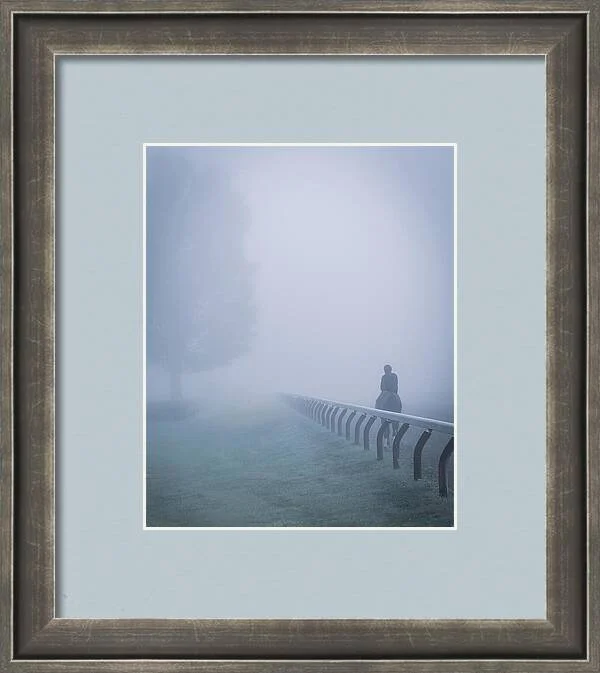
For me, real photography can be visually centering and spiritually meaningful because it points back to something in the physical world—a forest, mountain, ocean, flower, living creature or moment of light.
Photography can remind us to look back toward the real world.
That is part of what PeacefulWallArt.com means to me.
The name took on unexpected significance when the site became the new home for my fine art photography on September 21, 2026—the International Day of Peace.
It made me think about creating peace within the spaces we can control.
We have choices about what gets our attention.
We have choices about what enters our homes.
And we have choices about what we put on our walls.
A Trusted Source for Real Photography
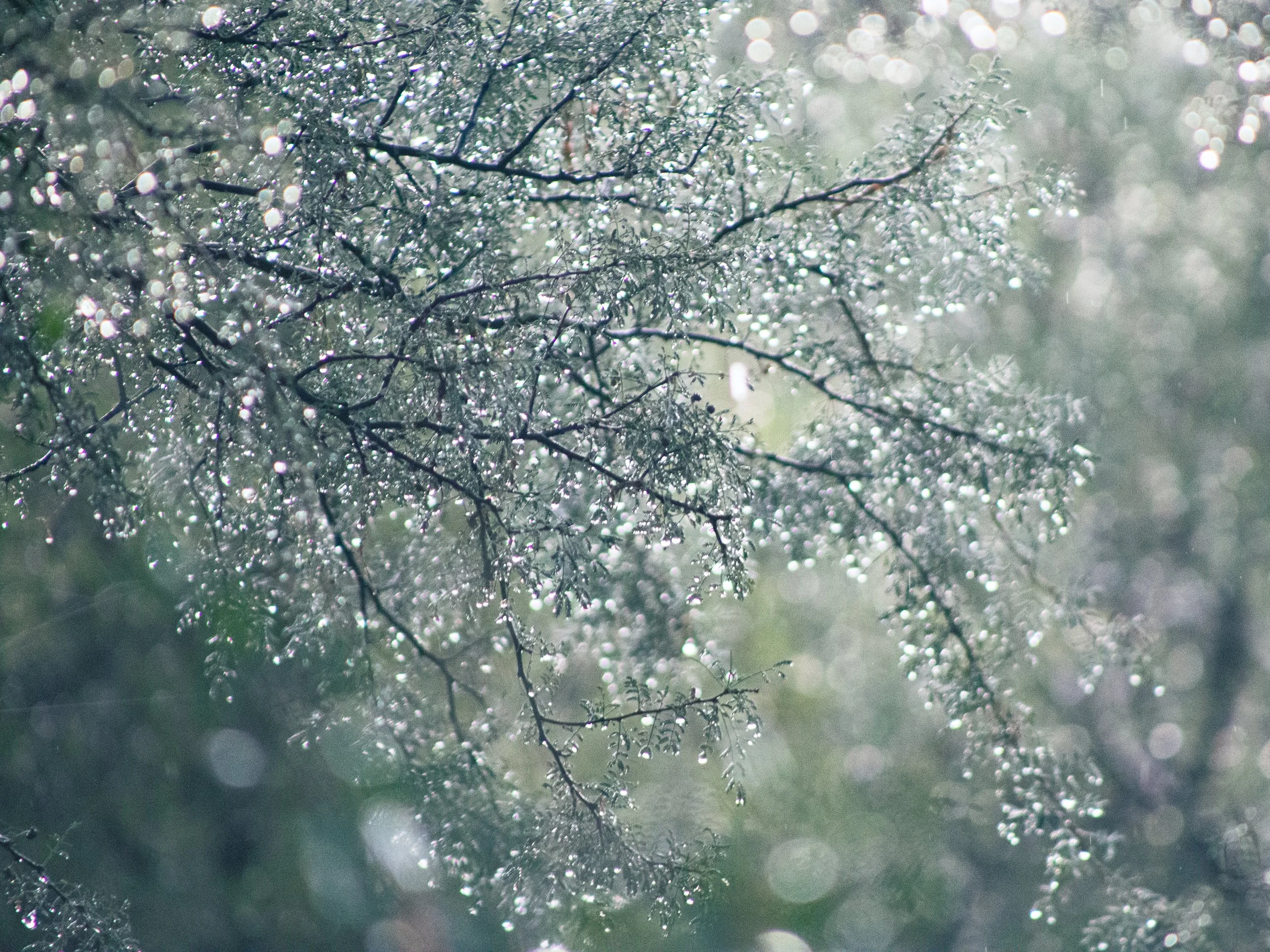
The Ethical Imagery Standard™ exists because transparency matters.
Look at lighting and shadows. Learn to recognize signs of synthetic imagery. But also learn to know and trust the source.
At Peaceful Wall Art, the source is clear.
My name is Katie Dobies. These are photographs of real places, subjects and moments that I photographed with a camera.
No wondering whether the mountain existed.
No questioning whether the coastline was generated.
Just photography—and the remarkable real world that made it possible.
You have a choice about the imagery you surround yourself with.
Choose what connects you with nature, memories and places you love. Choose what helps make your space a sanctuary from screens and artificial imagery.
The real world is still here. It is still beautiful. And it is worth noticing.
Peace be with you—and in your home.