The Art of Seeing: How Art Helps Us Pause in an AI World
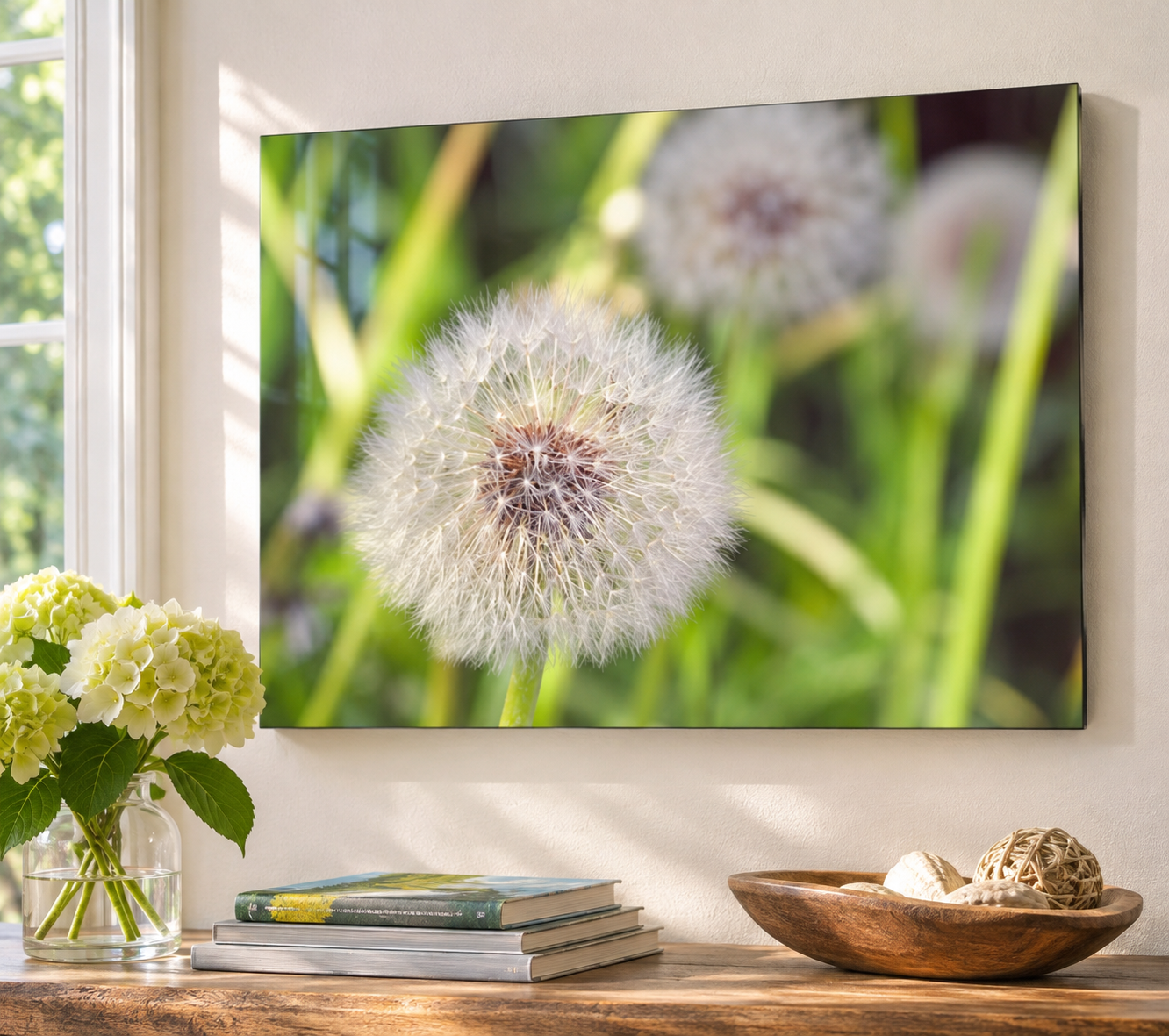
“Familiar Dandelions,” photographed by Katie Dobies and displayed as a metal print. Seeing something so small enlarged as art brought a sense of peace each time I saw it.
There is a difference between looking and seeing. When a piece of art truly connects with me, it can stop me in my tracks. For a moment, it is as if there is nothing else in the world but the world the artwork has created.
When I pause at art, I wonder about the inspiration of the artist. What method and medium did they use? Why those colors? Why that composition? What emotion does it make me feel? Some art pulls you in and makes you want to stay. That is seeing rather than simply looking. In a world increasingly filled with artificial intelligence and instantly generated images, I think that distinction is becoming more important.
“Art is an expression of our souls without using words.”
— Katie Dobies, photographer and founder of Peaceful Wall Art
Art That Makes Us Pause
On October 7, 2026, Pope Leo XIV welcomed the Louisiana Patrons of the Arts in the Vatican Museums to the Vatican. Speaking about art and beauty and the importance of preserving artistic and religious heritage for future generations, he reflected on what art can offer in an increasingly technological world.
“In an age dominated by technology,” he encouraged people to “allow time and space for beauty.” He also spoke about art's ability to uplift us and reveal something about the depth of the human spirit. The idea of allowing time and space for beauty resonates with me because that is what art can do. Art slows us down. It can calm us, make us wonder and cause us to really see something instead of simply looking at it.
I think of a photograph I took of dandelion fuzz that I later had printed large on metal. Enlarging something so small allowed me to appreciate its delicate detail and natural beauty in a completely different way. The reflective quality of the metal added another dimension to the photograph, and having it on my wall brought me a sense of peace every time I saw it. I never tired of looking at it.
That experience is part of what I mean by the art of seeing. The composition, color, mood, lighting, scenery and natural beauty of photography can pull me in. There is also something meaningful about knowing those elements began with something real—with a subject, light and moment that existed in the world.
Know What You're Looking At
Artificial intelligence adds a new question to our experience of art: What am I actually looking at, and who created it?
At an art festival, I came across an image in a gallery that immediately caught my attention. I liked it and wondered how the artist had created it. Later, when I read more about the creator, I discovered AI had been used to generate the image.
That experience reminded me how important it is to know the source—even at an art festival or gallery. Who created it? What medium was used? How was it made? AI simply adds another question: Was AI used to generate it?
Knowing the source gives us the choice to decide what we want to surround ourselves with.
The Spark of the Human
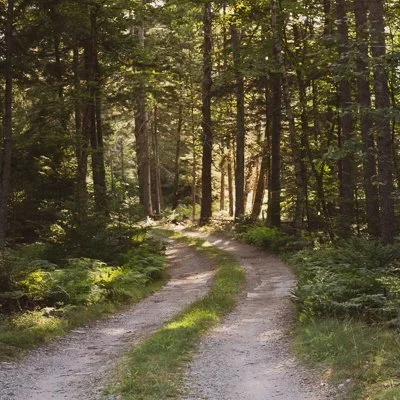
Sometimes art doesn't give us the answer. It simply invites us to slow down, look closer and see where the path leads. Photograph by Katie Dobies.
Five days before his comments about making time and space for beauty, Pope Leo XIV spoke directly about the distinction between human art and machine-generated imagery. On October 2, 2026, he addressed artists and curators participating in The Art of Possibility: Weaving Together, a meeting organized by the Dicastery for Culture and Education in the Consistory Hall of the Apostolic Palace.
Pope Leo described art as a different kind of “search engine.” Unlike technology that can instantly return thousands of answers, he spoke about art as inquiry and focused attention. Art, he said, can “draw our gaze” and “compel us to pause.” He then turned specifically to artificial intelligence and the importance of distinguishing human art from what machines produce.
“Algorithms lack the spark of the human.”
— Pope Leo XIV, Vatican City, October 2, 2026
That distinction matters to me as a photographer and as someone who appreciates art. AI gets its visual information from somewhere to begin with. I know this from a particularly interesting position because thousands of my own photographs have been cataloged for AI learning and use.
There is a human behind the screen giving AI instructions, and what the technology can do is certainly interesting. But it needs to be differentiated from original, human-created art. Perhaps AI gives us an opportunity to appreciate the human side of art again: the person who stood somewhere, noticed something, felt something, chose a medium and created something from it.
Looking at Something or Feeling Something
There is a big difference between wanting to simply look at something and wanting to feel something from the art around you. Human-made art gives us another person to connect with. We can wonder what the artist saw, what inspired them and why they chose to create what they did. Their choices of medium, color, composition, light and subject become part of the work.
Pope Francis spoke about the importance of artists during a visit to Venice on April 28, 2024. While attending the Venice Art Biennale, he met with artists at the Church of La Maddalena on the island of Giudecca and told them:
“The world needs artists.”
— Pope Francis, Venice, April 28, 2024
During the same meeting, Pope Francis said art educates us in a “contemplative gaze”—a way of looking that is neither indifferent nor superficial. That idea connects closely with what art means to me. Art isn't only something we look at. Art can teach us how to see. And perhaps the more time we spend truly seeing, the more we begin to notice beauty outside the artwork as well.
Choosing Soulful Art
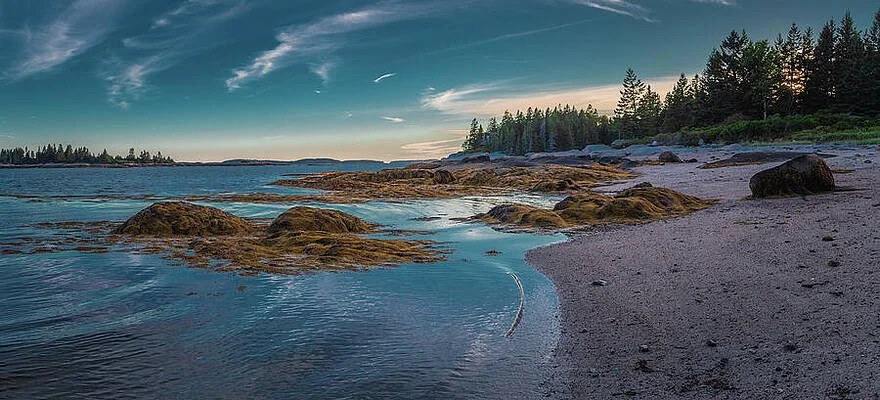
Deer Isle, Maine, photographed by Katie Dobies. A real place, a real moment and the kind of natural beauty that invites us to pause, look longer and truly see.
Peaceful art doesn't necessarily have to depict a traditionally peaceful subject. To me, peaceful art is soulful art. It connects with your own soul.
Think about the question: If I had one extra hour this week, how would I want to spend it? Spending some of that time in front of art sounds like a very good thing for the soul. It is a time-out, a way of slowing down and bringing some balance into our lives.
But art doesn't require us to set aside an hour. That's part of what makes surrounding ourselves with it so valuable. It can simply be around us in everyday life—on our walls, on a notebook, on a coffee cup or even on a shower curtain. We can encounter it in small moments throughout the day.
That idea is part of what I hope people experience through my photography and Peaceful Wall Art. My photographs have done this for me first. I get pulled into composition, color, mood, lighting, scenery and natural beauty. My hope is that someone else can find an image that does the same for them—something that gives them a reason to pause and a moment of peace when they see it.